
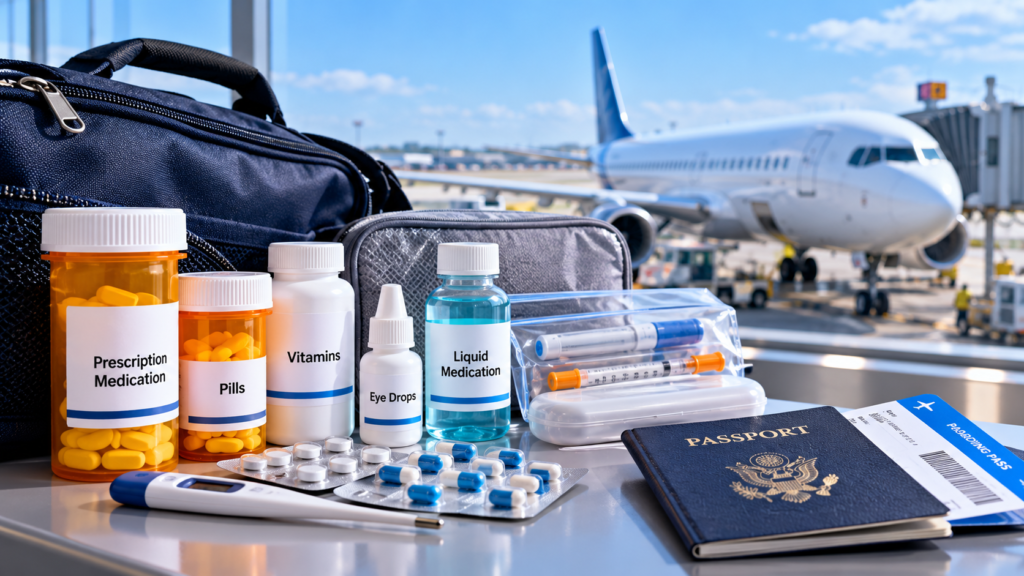
Can You Bring Medication on a Plane? TSA Rules (2026)
Learn how to travel with pills, prescription drugs, liquid medicine, insulin and medical supplies. Understand TSA screening rules and prepare your medication before your next US flight.
Quick Answer
Yes, you can generally bring medication on a plane in the United States. TSA allows pills, tablets and medically necessary liquid medication through airport security, subject to screening. Liquid medicine needed for your trip may be allowed in quantities greater than the usual 3.4-ounce (100 mL) limit.
Keep essential medication in your carry-on, tell the TSA officer about medically necessary liquids at the start of screening, and follow instructions for additional inspection. If you are flying internationally, check the medication laws of your destination and transit countries too.
Rules can vary by medication and circumstance. Confirm current requirements with official sources before departure.
Can You Bring Medication on a Plane in Your Carry-On?
Travelers can generally bring medication through TSA security in carry-on bags. This includes many everyday medicines, prescription drugs, pills, tablets and medically necessary liquids. Items may be screened by X-ray or another approved method.
For most travelers, keeping essential medicine in a carry-on is the practical choice because checked baggage can be delayed, lost or difficult to access during a journey.
- Keep essential medication accessible during your flight.
- Use clearly labeled containers when practical.
- Keep prescriptions and supporting documents handy if they may be needed.
- Tell the TSA officer about medically necessary liquids and follow screening instructions.
- Check international restrictions before carrying medication across borders.
Can You Bring Pills on a Plane?
Yes. Pills, tablets and other solid medications are generally permitted through TSA airport security. You can usually pack them in a carry-on or checked bag, but essential doses are best kept in your carry-on.
Do pills need to be in their original bottles?
TSA does not generally require prescription medication to be in its original prescription bottle for checkpoint screening. However, keeping medication in its original labeled packaging can make identification easier. State laws, destination-country requirements and rules for specific medicines may differ.
Can you bring over-the-counter medicine?
Many common over-the-counter medications, including tablets and capsules, can generally be taken through security. Always check the rules for the particular product if it contains a restricted ingredient or has special storage requirements.
Liquid Medication on a Plane: TSA Rules
The usual TSA liquids rule limits ordinary carry-on liquid containers to 3.4 ounces (100 mL). However, medically necessary liquids, gels and creams may be allowed in larger quantities when needed for your trip.
Can you bring liquid medicine over 3.4 oz?
Yes. Medically necessary liquid medication may be permitted in reasonable quantities greater than 3.4 ounces (100 mL). It will need to undergo screening, and additional inspection may be required.
Do you need to put liquid medicine in the quart-size bag?
Medically necessary liquid medication does not have to be placed in the standard quart-size liquids bag. Tell the TSA officer about it at the beginning of the screening process and remove it for separate inspection when instructed.
What about liquid prescription medicine, creams and gels?
Medically necessary liquid prescription medicine, creams and gels may qualify for the medical exemption. Pack containers securely to prevent leaks and follow the instructions given by the screening officer.
Flying With Prescription Medication
Prescription medication is generally allowed through US airport security, subject to screening and any applicable restrictions. Preparation is especially important when carrying medication that may be regulated in another country.
- Keep medication clearly identified and securely packed.
- Bring a copy of your prescription or a doctor's note when useful.
- Keep original labeled packaging when practical, particularly for international journeys.
- Check restrictions for controlled substances and medicines containing regulated ingredients.
- Carry only medication you are legally allowed to possess and use.
Can TSA ask to inspect prescription medication?
Yes. Medication may be subject to security screening and additional inspection. Follow the officer's instructions and explain when an item is medically necessary.
Can you travel internationally with prescription drugs?
Often, but the rules depend on the medication and the countries involved. Some medicines that are commonly prescribed in one country may be restricted in another or may require permits or supporting documentation.
Can You Bring Insulin, Syringes and Medical Supplies?
Medically necessary insulin, associated syringes and other medical supplies can generally be brought through TSA screening. Keep these items organized and let the officer know when you are carrying medical supplies.
Insulin and diabetes supplies
Keep insulin and essential diabetes supplies in your carry-on so they remain accessible during travel. Follow the storage temperature guidance for your specific medicine and prepare for additional screening.
Syringes and needles
Syringes associated with medically necessary medication can be permitted through security. Keep them with the medication they are used for and declare your medical supplies to the officer when appropriate.
Ice packs and cooling accessories
Ice packs, frozen gel packs and other cooling accessories needed for medically necessary medication may be allowed, subject to screening. Check storage recommendations with your pharmacist or healthcare professional before travelling.
For additional details, visit the official TSA guidance on medical conditions and screening.
Should Medication Go in Carry-On or Checked Luggage?
For most travelers, essential medication belongs in a carry-on bag. Checked luggage can be delayed, misrouted or become inaccessible during the flight. Follow the storage instructions for your specific medication, especially if it needs temperature control.
| Medication type | Practical packing approach | What to remember |
|---|---|---|
| Pills and tablets | Keep essential doses in your carry-on | Use clear labels when practical |
| Prescription medicine | Pack securely and carry documents if appropriate | Check special legal restrictions |
| Liquid medicine | Protect containers from leaks and declare for screening | Medical exemptions may apply |
| Insulin and medical supplies | Keep necessary supplies accessible | Allow for separate screening |
| Temperature-sensitive medicine | Use suitable storage recommended for that medicine | Confirm safe temperature requirements |
Plan enough time for check-in and screening. Our guide explains how early to get to the airport so you can prepare for your journey without rushing.
How to Pack Medication for Airport Security
Use this checklist to prepare medication before you leave for the airport.
Check the rules for your medicine
Review TSA guidance and any additional restrictions that apply to the medication you plan to carry.
Pack essential doses in your carry-on
Keep the medication you may need during your journey accessible rather than relying entirely on checked baggage.
Keep labels and documents handy
Original packaging, a prescription or a doctor's note may be useful, particularly for international travel or regulated medication.
Declare medically necessary liquids
Tell the TSA officer about liquid medication at the start of screening and separate it when instructed.
Organize medical supplies
Keep syringes, insulin, cooling accessories and related supplies easy to identify and inspect.
Check international medication laws
Verify that your medicine is permitted in your destination and any countries where you will connect.
International Flights: Check More Than TSA Rules
TSA rules concern security screening at US airports. They do not determine whether every medication can be brought into another country.
Before an international trip, check the medication rules for your destination and any country where you will pass through customs. Some controlled medicines and specific ingredients may require permits, supporting documents or advance approval.
- Check the official rules of the destination country.
- Confirm requirements for controlled or restricted medicines.
- Ask whether a prescription, doctor's letter or import permit is needed.
- Check rules for transit countries if you have a connecting flight.
- Confirm the medication's storage requirements for the duration of the journey.
For travel into the United States, consult US Customs and Border Protection's medication guidance. You can also review the CDC guidance on restricted medications during travel.
Common Medication Packing Mistakes to Avoid
- Packing all essential medicine in checked baggage: Keep the medication you may need during the journey accessible.
- Assuming every liquid follows the same rule: Medically necessary liquids may qualify for an exemption, but screening still applies.
- Ignoring international restrictions: Check the rules for controlled and restricted medication before crossing borders.
- Leaving medicine difficult to identify: Clear labels and supporting documents can help if questions arise.
- Forgetting related medical supplies: Pack any syringes, cooling supplies or accessories you need.
- Arriving at the airport in a rush: Allow enough time for security and any additional inspection.
If a disruption affects your travel plans, read our guide on what to do when a flight is delayed or cancelled. If checked baggage goes missing, see our lost luggage guide.
Frequently Asked Questions
Can you bring medication on a plane in your carry-on?
Yes. TSA generally permits pills, solid medication and medically necessary liquid medication in carry-on bags, subject to screening and applicable restrictions.
Can you bring pills on a plane without the original bottle?
TSA does not generally require prescription medicine to be in its original bottle for checkpoint screening. However, original labeled packaging is useful, and state or destination-country laws may impose additional requirements.
Can you bring liquid medication over 3.4 ounces?
Yes. Medically necessary liquid medication may be allowed in reasonable quantities greater than 3.4 ounces (100 mL). Declare it at the start of screening and follow instructions for additional inspection.
Do I need to tell TSA about my medication?
Follow TSA instructions. You should declare medically necessary liquids at the beginning of screening and separate them when instructed. Solid medication may also be screened.
Can you bring insulin and syringes on a plane?
Medically necessary insulin and associated syringes can generally pass through TSA screening. Keep supplies organized, inform the officer and allow time for additional inspection.
Is it better to pack medication in checked luggage?
Keeping essential medication in your carry-on is generally the more practical choice because checked bags may be delayed or become inaccessible. Follow storage instructions for your medicine.
Can I take prescription medication on an international flight?
Often yes, but rules depend on the medication and countries involved. Check destination and transit-country requirements, especially for controlled or restricted medicines.
Where can I check the latest TSA medication rules?
Use the official TSA What Can I Bring list and TSA medical-condition guidance. Requirements and screening decisions can vary by item and circumstance.
Disclaimer: This article provides general travel information and is not medical or legal advice. Check current official requirements and consult a healthcare professional about medication storage and use.
Related Travel Guides
Explore these related SkyAssist guides to help prepare for airport security and unexpected travel problems.
TSA Carry-On Rules: What Can You Bring? → How Early Should You Get to the Airport? → Flight Delayed or Cancelled: USA Guide →More Flight & Travel Guides +
How to Change a Flight Booking → How to Find Cheap Flights in the USA → Missed Connecting Flight: What to Do → How Much Does It Cost to Check a Bag? → What Happens If a Flight Is Overbooked? → Lost Luggage: What to Do and How to Claim → Delayed Baggage Compensation USA → Does Travel Insurance Cover Cancelled Flights? → Airline Changed My Flight? Refund Rules →Official Sources
Use official government resources to confirm current medication screening and travel requirements before departure.
- TSA Travel Tips — medication and security screening
- TSA What Can I Bring? — permitted items list
- TSA Cares — medical conditions and screening
- US Customs and Border Protection — medication guidance
- CDC — traveling with restricted medications
Disclaimer: This article is for general educational purposes only and is not medical or legal advice. Screening requirements and international medication laws can vary. Confirm the current rules with the relevant authorities before traveling.
Need More Help With Your Travel Plans?
Explore practical flight and airport guides on SkyAssist.pro. Have a question about our website? Get in touch with our team.


Pingback: Can You Bring Food on a Plane? TSA Rules (2026) - skyassist.pro
Pingback: Can You Bring Food on a Plane? TSA Rules (2026)